Computational Physics
Rooted in physics...
Rocket Operation GNC Sim
Designing a C++ foundation for simulating rocket flight dynamics using custom 3D vector mathematics, including position, gravity, forces, and navigation-related calculations.
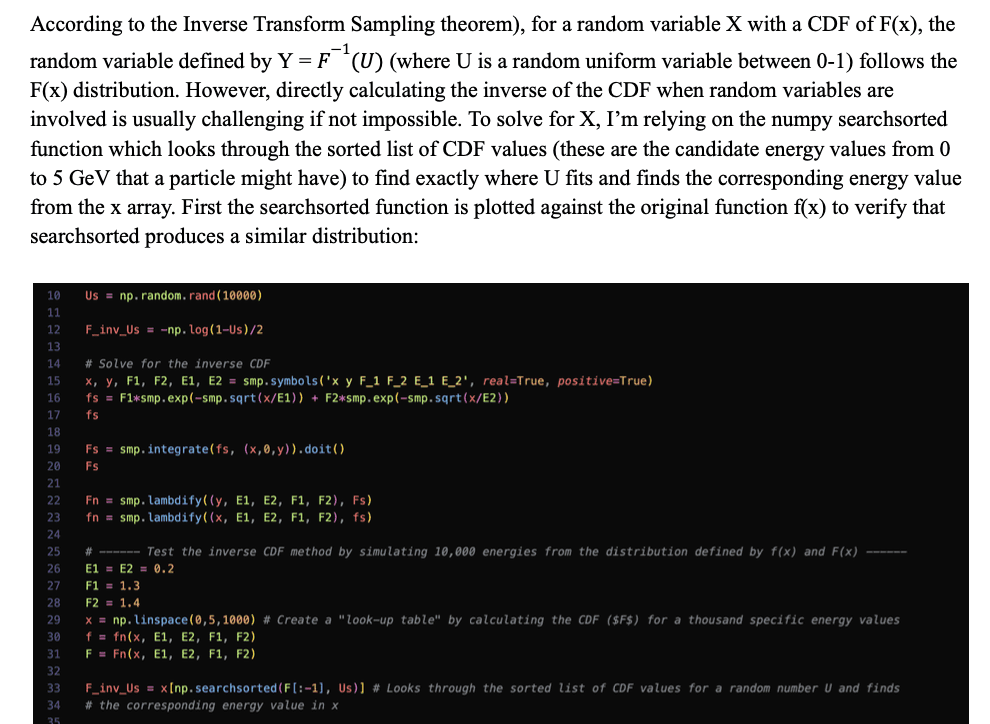
Monte Carlo Simulations in Python
Two Monte Carlo case studies built from first principles: modeling energy deposition in a CERN ATLAS-style calorimeter cell via inverse transform sampling, and simulating a year of stock price paths with geometric Brownian motion.
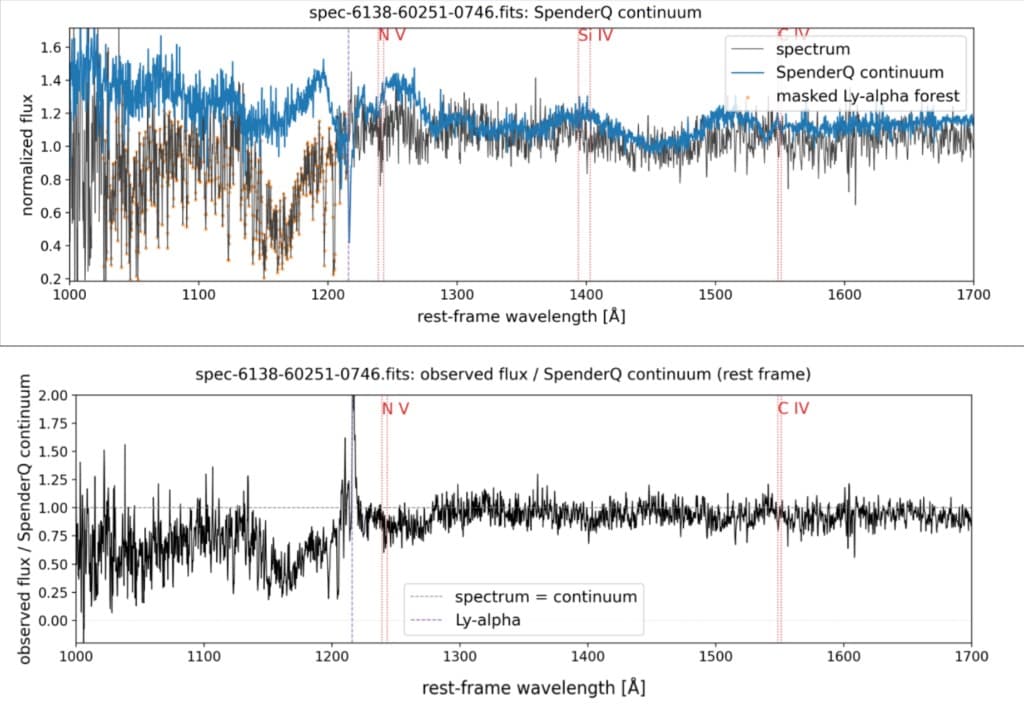
SpenderQ-LYA — ML Pipeline for Large Quasar Spectra Catalogs
Public integration layer I built from the upstream SpenderQ framework (galactic-ai/SpenderQ) for the UW Bothell quasar research group: a data-driven Python stack that embeds the Spender convolutional spectrum autoencoder to reconstruct intrinsic quasar continua, mask absorption (including the Lyman-α forest), and batch-process large spectroscopic datasets. Complements the group’s EHVO analysis pipeline as an ML-based continuum fallback when classical normalization is insufficient.
Extremely High Velocity Quasar Outflow Research Pipeline
My previous working branch of the UW Bothell quasar research group's collaborative codebase: Python tools for normalizing raw SDSS spectra, flagging absorption troughs, and running cross-correlation, redshift, and variability analyses to isolate extremely high-velocity outflow (EHVO) quasars from the DR16 sample. Using this pipeline I successfully identified the fastest outflow in the universe autonomously; it is scaled to process thousands of spectra at a time. Note: Most up to date codebase is hosted on a private repository, commits to be merged later.
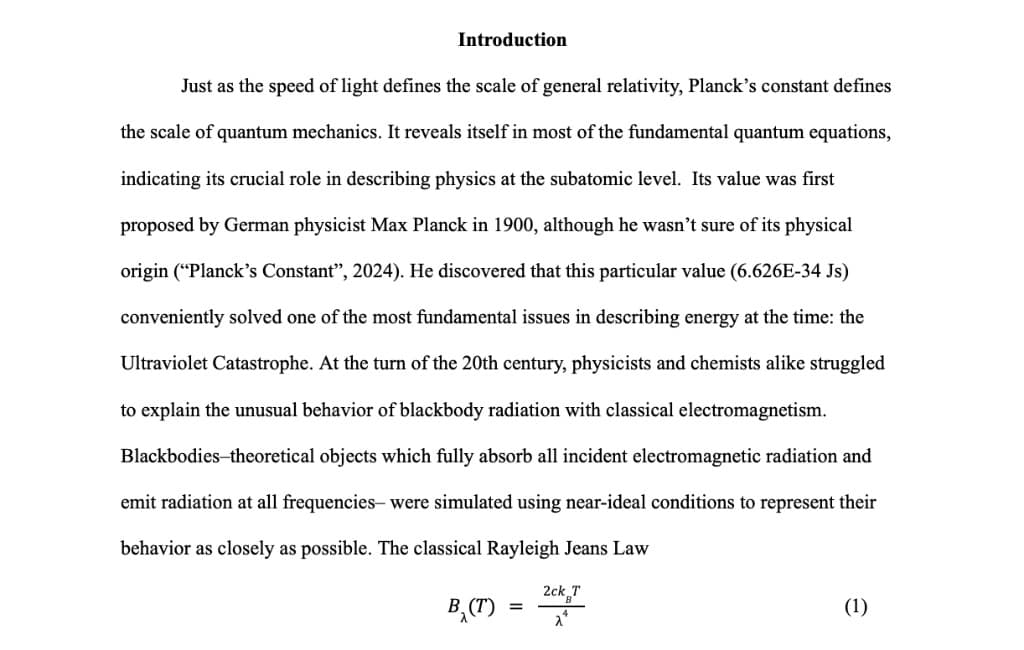
Measuring the Fundamental Planck's Constant Using LEDs
Derived Planck's constant from scratch by measuring the threshold voltage of four LED colors and relating the slope of voltage-vs-frequency to h, landing within 3.7% of the accepted value using a low-cost breadboard circuit.
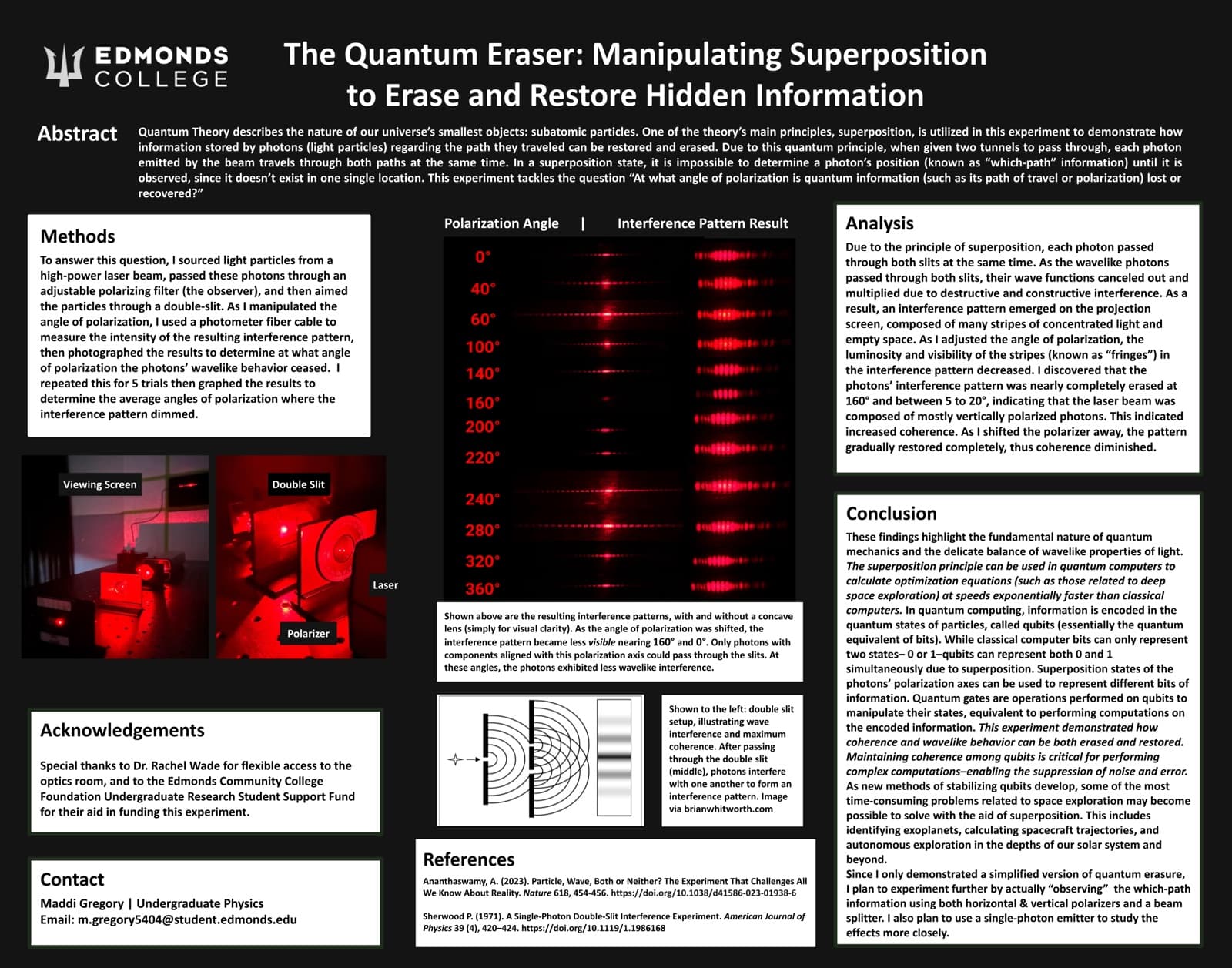
Quantum Eraser: Erasing & Restoring Which-Path Information
Built a polarizer-and-double-slit setup to test at what polarization angle a photon's which-path information is erased, mapping interference-fringe visibility against filter angle to pinpoint the laser's dominant polarization axis.